Vector Basics
Definition and Notation
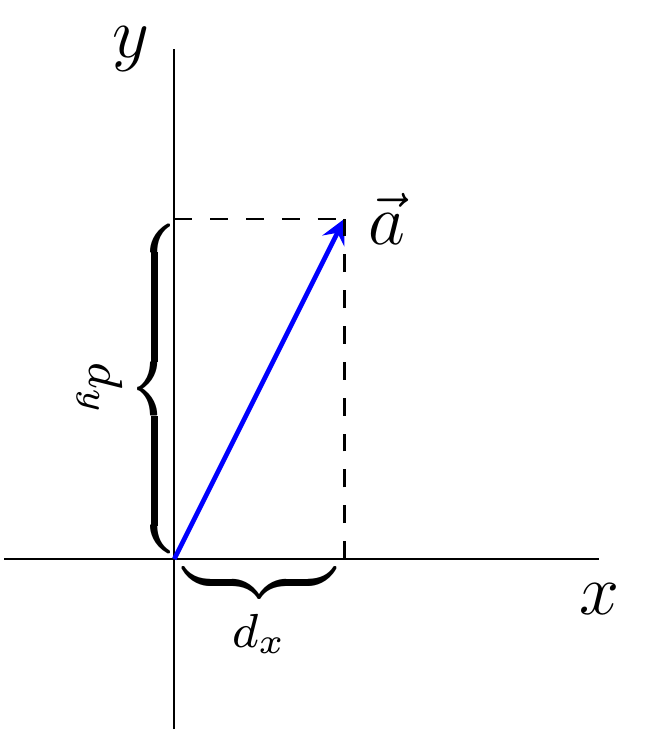
A vector is a mathematical object that has both magnitude (length) and direction. Vectors are used to represent physical quantities such as force, velocity, and displacement.
Vectors are denoted by lowercase or uppercase letters with an arrow above them: a⃗, A⃗. In a Cartesian coordinate system: A⃗ = (Ax, Ay, Az).
Types of Vectors
Collinear vectors lie on the same line or on parallel lines: (x₁, x₂) = p · (y₁, y₂).
Codirected vectors are collinear and point in the same direction. Oppositely directed vectors are collinear but point in opposite directions.
Zero vector 0⃗: zero length, undefined direction. Orthogonal vectors: dot product equals zero. Equal vectors: same magnitude and direction. Opposite vectors: same magnitude, opposite direction.
Unit Vectors and Basis
A unit vector has magnitude 1: ê = a/|a|. The standard basis vectors in 2D: î = (1, 0) and ĵ = (0, 1); in 3D, add k̂ = (0, 0, 1).
Any vector can be expressed as a linear combination: a = a₁î + a₂ĵ + a₃k̂.
Linear Dependence
Linearly dependent vectors can be expressed as linear combinations of others. Linearly independent vectors cannot be expressed through other vectors.