Triangle Problems
Area Formulas
S = ½·a·h (base times height divided by 2); S = ½·a·b·sin γ (two sides and included angle); Heron's formula: S = √(s(s−a)(s−b)(s−c)), where s = (a+b+c)/2 is the semi-perimeter.
Law of Sines
a/sin α = b/sin β = c/sin γ = 2R, where R is the circumradius. Useful when you know an angle-side pair.
Law of Cosines
c² = a² + b² − 2ab·cos γ. This generalizes the Pythagorean theorem (when γ = 90°, cos γ = 0).
Notable Points
The incenter (intersection of angle bisectors) is equidistant from all sides: r = S/s.
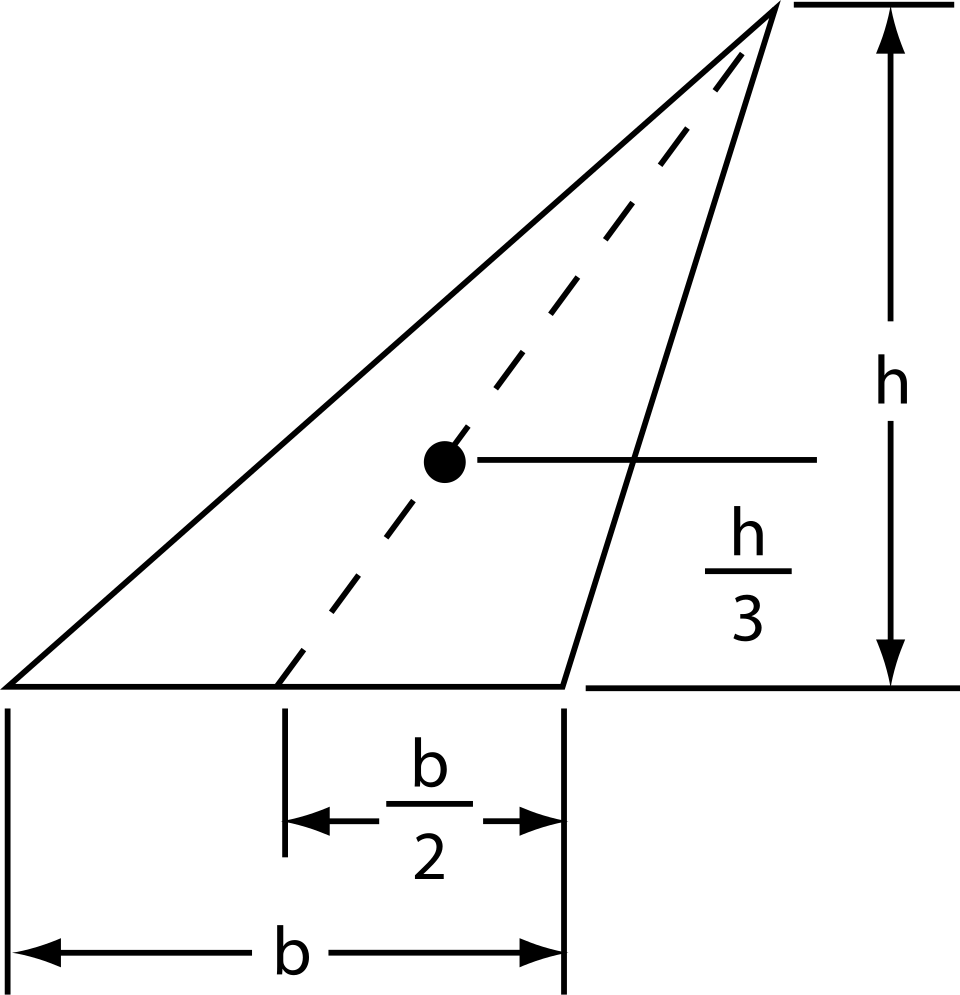
The centroid (intersection of medians) divides each median in ratio 2:1 from the vertex.
The circumcenter (intersection of perpendicular bisectors) is equidistant from all vertices: R = (a·b·c)/(4S). In a right triangle: R = c/2.
Sample Problems
Problem: The base of triangle ABC equals √98. Find the length of the segment parallel to the base that divides the triangle into two equal areas.
Solution: Since the triangles are similar, the ratio of areas equals the square of the similarity coefficient: SABC/SMBN = (AC/MN)² = 2. So MN² = 98/2 = 49, giving MN = 7.