Play 100+ Free Online Games & Learn Math

CalcBot is a free browser platform that combines 100+ curated games across 12 categories with a powerful scientific calculator and a library of math articles covering algebra, geometry, percentages, polynomials, and vectors. No downloads, no sign-ups, no installs — play, calculate, and learn in seconds.

Every game runs natively in your browser at full speed. We also publish original how-to-play guides, tips-and-secrets articles, and related-game recommendations for every title — over 100,000 words of free gaming and educational content.

Advertisement

racing Games

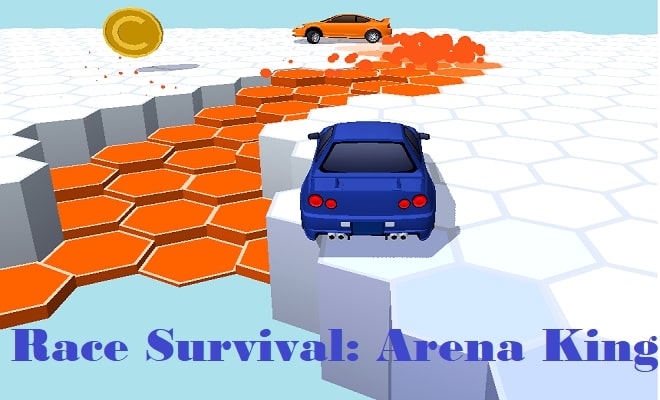
High-speed browser racing — motorcycle trials, drift games, kart arenas, and rally racers. Time your throttle, master the corners, and chase three-star ratings. Browse all racing games →

12 games

sports Games

Arcade-style sports games with two-button controls. Basketball, soccer, golf, wrestling — quick matches, deep skill ceilings, local 2-player on most titles. Browse all sports games →

10 games

platformer Games

Run, jump, dodge. Momentum-based runners, precision platformers, exploration sandboxes, and endless runners — every great platformer lives or dies on how good moving feels. Browse all platformer games →

14 games

puzzle Games

Slow down and think. Sliding-tile puzzles, block-rolling brain-teasers, and craft-and-discover games. Perfect for a 5-minute coffee break. Browse all puzzle games →

3 games

action Games

Fast movement, snap decisions, satisfying combat. Twin-stick shooters, run-and-gun classics, lane-based tower defense, and turn-based artillery. Browse all action games →

9 games

adventure Games

Long-form progression. Sandbox crafting, character-training RPGs, choose-your-path heist games, and exploration-focused titles. Lose yourself in a world. Browse all adventure games →

11 games

io Games

Browser-native multiplayer arenas. Short matches, big lobbies, grow-and-conquer loops. Click play and you're in a live game within seconds. Browse all io games →

2 games

idle Games

The game keeps playing even when you're not. Click to start, set up auto-producers, walk away, come back richer. Equal parts meditation and spreadsheet. Browse all idle games →


2 games

horror Games

Powerlessness, dread, survival. Animatronic security jobs, escape-from-grandma survival horror, and atmospheric indie scares. Headphones strongly recommended. Browse all horror games →

3 games

strategy Games

Think several moves ahead. Tower defense, gladiator RPGs, turn-based tactics. Placement, upgrade order, and damage-type coverage all matter. Browse all strategy games →


3 games

casual Games

Comfort-food gaming. Restaurant management, time management, satisfying order-cook-serve loops. Easy to learn, hard to put down. Browse all casual games →

4 games

arcade Games

Gaming in its purest form. Single-screen, high-score-chasing, instantly replayable. Foundational classics and modern reinterpretations. Browse all arcade games →


32 games
Advertisement

About CalcBot — Free Online Games & Calculator

CalcBot is a free online platform that combines 100+ browser games with a scientific calculator and a library of math tutorials — all running natively in your web browser, with no downloads, no installations, and no sign-ups required. The game catalog spans 12 categories — racing, sports, platformer, puzzle, action, adventure, .io, idle, horror, strategy, casual, and arcade — and the educational tools cover algebra, geometric shapes, percentages, polynomials, and vectors.

Our curated game catalog spans the foundational classics of browser gaming — Pac-Man, Doom 1, the original 1985 Super Mario Bros, Five Nights at Freddy's, the Henry Stickmin series, the complete Duck Life series, the complete Bloons TD trilogy, and the Papa's restaurant-management series — alongside modern hits like 2048, OvO, Geometry Dash, Hole.io, Retro Bowl, and Cookie Clicker. Every game is embedded via iframe from its original publisher's CDN, ensuring you always play the latest version directly from the source.

Beyond gaming, CalcBot is also a learning platform. The built-in scientific calculator — accessible from any page via the floating action button in the bottom-right corner — supports basic arithmetic, trigonometry, logarithms, exponents, parentheses, and graph plotting. It's a useful tool for students doing homework, professionals needing quick calculations, or anyone who wants a calculator one click away from their favorite game.

Our math article library covers five core topics — algebra (fractions, inequalities, rational expressions), geometric shapes (triangles, the Pythagorean theorem, similarity and congruence), percentages (compound percentages, mixture problems), polynomials (operations, factoring, the quadratic formula), and vectors (dot and cross products, vector geometry). Each article includes clear explanations, worked examples, and key formulas — perfect for exam prep, homework help, or quick reference. The articles are written by our editorial team and are completely free to read.

New games, articles, and tools are added regularly. Bookmark calcbot.net for your daily gaming break, your next homework session, or your quick-calculation needs — whether you're chasing a high score in Pac-Man, surviving the night in Five Nights at Freddy's, looking up the quadratic formula, or plotting a graph for your math assignment. CalcBot is, and always will be, completely free to use.

Ready to play, calculate, or learn? Pick a category above, jump into a popular game, or open our free tools:

calcbot
MaterialsContact
Your smart science assistant
Advertisement
 
0

🔄 Unit Converters

📏 Length

Advertisement

💡 Tips for Students

💡

Quick Percentage Tip

To find X% of Y, multiply: X% × Y. To add X% to Y: Y × (1 + X/100). To subtract X%: Y × (1 − X/100). Example: 20% off $80 = $80 × 0.80 = $64.

🧠

Multiply by 11

To multiply a two-digit number by 11, add the digits and place the sum between them: 35 × 11 → 3(3+5)5 = 385. If the sum exceeds 9, carry over: 78 × 11 → 7(7+8)8 → 7(15)8 → 858.

🎯

Significant Figures

When multiplying/dividing, the result should have the same number of significant figures as the least precise input. When adding/subtracting, match the least number of decimal places.

🧩

Factoring Quadratics

For ax² + bx + c, find two numbers that multiply to ac and add to b. Then split the middle term and factor by grouping. If b²−4ac is a perfect square, it factors nicely over integers.

🔢

Squaring Numbers Ending in 5

To square a number ending in 5: multiply the remaining digits by (itself + 1), then append 25. Example: 85² = 8×9 = 72, so 85² = 7225. 35² = 3×4=12, so 35² = 1225.

📊

The 68-95-99.7 Rule

In a normal distribution: ~68% of data falls within 1σ, ~95% within 2σ, and ~99.7% within 3σ of the mean. Useful for quick probability estimates in statistics.

🔄

Fraction to Decimal Patterns

1/7 = 0.142857..., 1/6 = 0.1666..., 1/8 = 0.125, 1/9 = 0.111..., 1/12 = 0.0833... Memorizing common fractions speeds up mental math significantly.

📏

Cross-Multiplication

To solve proportions a/b = c/d, cross-multiply: a×d = b×c. This works for any proportion and is the fastest way to find a missing value. Example: 3/4 = x/20 → 3×20 = 4x → x = 15.

🔑

Quadratic Formula

For ax² + bx + c = 0: x = (−b ± √(b²−4ac)) / 2a. The discriminant Δ = b²−4ac tells you: Δ > 0 = two real roots, Δ = 0 = one repeated root, Δ < 0 = two complex roots.

📐

Difference of Squares

a² − b² = (a+b)(a−b). This is one of the most useful factoring patterns. Use it backwards to quickly multiply: 97 × 103 = (100−3)(100+3) = 10000 − 9 = 9991.

🎲

Probability Basics

P(A or B) = P(A) + P(B) − P(A and B). For independent events: P(A and B) = P(A) × P(B). Complement rule: P(not A) = 1 − P(A). Total probability always equals 1.

Long Division Shortcut

To check if a number is divisible: by 2 (even), by 3 (sum of digits divisible by 3), by 4 (last two digits divisible by 4), by 9 (sum of digits divisible by 9), by 5 (ends in 0 or 5).

Educational Materials

Comparing Numbers

On the number line, the number to the right is always greater. Positive numbers are greater than zero, and zero is greater than negative numbers. For any two real numbers a and b:

if ab > 0, then a > b;   if ab < 0, then a < b;   if ab = 0, then a = b.

When comparing negative numbers, the one with the smaller absolute value is greater: −3 > −7 because |−3| < |−7|. To compare fractions, convert them to a common denominator or to decimal form. For example, to compare 3/7 and 2/5: 3/7 = 15/35 and 2/5 = 14/35, so 3/7 > 2/5.

Key rules: (1) If a > b and b > c, then a > c (transitivity). (2) If a > b, then a + c > b + c for any c. (3) If a > b and c > 0, then ac > bc; but if c < 0, then ac < bc — multiplying by a negative reverses the inequality. (4) The reciprocal of a larger positive number is smaller: if a > b > 0, then 1/a < 1/b.

Fractions

A common fraction a/b (where b ≠ 0) represents parts of a whole. Equivalent fractions represent the same value: a/b = (a·k)/(b·k) for k ≠ 0. Reducing a fraction means dividing numerator and denominator by their greatest common divisor (GCD). For example, 18/24 = (18÷6)/(24÷6) = 3/4.

Decimal fractions use place values: 0.75 = 75/100 = 3/4. To compare decimal fractions, align decimal points and compare digit by digit. A terminating decimal is a fraction with denominator a power of 10; a repeating decimal like 0.3̄ = 3/9 = 1/3. The general rule: 0.ᾱ = a/9, 0.āb̄ = (10a + b)/99.

To add or subtract fractions, find the least common denominator (LCD) — the LCM of the denominators. For example: 1/6 + 3/8: LCM(6,8) = 24, so 1/6 + 3/8 = 4/24 + 9/24 = 13/24. To multiply: (a/b)·(c/d) = (ac)/(bd). To divide: (a/b) ÷ (c/d) = (ad)/(bc), where c ≠ 0.

Inverse Proportionality

Two quantities x and y are inversely proportional if their product is constant: x · y = k, or equivalently y = k/x, where k ≠ 0 is the constant of inverse proportionality. The graph of y = k/x is a hyperbola with two branches in quadrants I and III (when k > 0) or II and IV (when k < 0). As x increases, y decreases, and vice versa — but they never reach zero.

Key properties: (1) If x is multiplied by a factor n, then y is divided by n (e.g., if x doubles, y halves). (2) The product of any pair of corresponding values is always k. (3) The function y = k/x is undefined at x = 0 and never crosses either axis.

Typical problems: If 6 workers complete a job in 10 days, how many days for 15 workers? Since workers × days = constant: 6 × 10 = 15 × d, giving d = 4 days. Similarly, if a car traveling at 60 km/h takes 3 hours, at 90 km/h it takes 60×3/90 = 2 hours. Always verify that the product remains constant.

Inequalities with Parameters

A linear inequality with a parameter has the form ax + b > 0 (or <, ≤, ≥). The solution depends on the parameter a: if a > 0, then x > −b/a; if a < 0, the inequality sign reverses: x < −b/a; if a = 0 and b > 0, every x is a solution; if a = 0 and b ≤ 0, there is no solution. Always analyze the critical parameter values where the coefficient of x changes sign.

For quadratic inequalities ax² + bx + c > 0, first find the discriminant D = b² − 4ac. If D < 0 and a > 0, the entire parabola is above the x-axis — all real x satisfy the inequality. If D > 0, find roots x₁ and x₂, then the sign of ax² + bx + c matches the sign of a outside the interval [x₁, x₂] and is opposite between the roots.

The graphical method is powerful: sketch the parabola y = ax² + bx + c and identify where it is above or below the x-axis. When parameters are involved, consider cases: D > 0 (two distinct roots), D = 0 (one double root), D < 0 (no real roots). For each case, determine the solution set based on the sign of a and the direction of the inequality.

Rational Inequalities

A rational inequality involves a fraction with polynomials, such as P(x)/Q(x) > 0. The interval method (also called the sign chart method) is the standard approach: (1) Find all zeros of P(x) and Q(x). (2) Plot these points on a number line (use open circles for zeros of Q(x) since they are excluded from the domain). (3) Determine the sign of the expression in each interval. (4) Select intervals matching the inequality sign.

The rightmost interval always has the sign determined by the leading coefficients of P(x) and Q(x). Signs alternate when crossing a root of odd multiplicity but stay the same when crossing a root of even multiplicity. For example, for (x−1)²(x+2) / ((x−3)(x+1)) > 0, the sign does not change at x = 1 (even power) but does at x = −2, x = −1, and x = 3.

Common mistakes: (1) Multiplying both sides by a denominator without knowing its sign — this can reverse the inequality. (2) Forgetting that zeros of the denominator are never included in the solution. (3) Including roots of the numerator for strict inequalities (> or <) — these should be excluded. (4) Not checking whether the expression is defined at boundary points. Always bring everything to one side as a single fraction before applying the interval method.

Why CalcBot?

CalcBot is the first free platform that combines a full-featured scientific calculator, graph plotting tools, unit converters, and comprehensive educational materials in one place. Our tools are designed for students, educators, and professionals who need reliable mathematical resources without expensive subscriptions.

Unlike other calculator websites that offer basic functionality behind paywalls, CalcBot provides advanced features — including trigonometric functions, logarithms, graphing capabilities, and 25+ unit converter categories — completely free. There are no free alternatives that match this combination of tools and educational content.

Our educational materials cover core mathematics topics from basic algebra to vectors, with clear explanations, worked examples, and key formulas. Whether you are preparing for exams, doing homework, or exploring new topics, CalcBot gives you the tools and knowledge you need — all at no cost.

Advanced Functions

Trigonometric, logarithmic, exponential, and factorial calculations

Lightning Fast

Instant calculations with no loading time. Works offline once loaded

Educational

Graphing, unit converters, and study tips for students and professionals

Advertisement