Advertisement
Finding a Percentage of a Number
Finding a Percentage of a Number
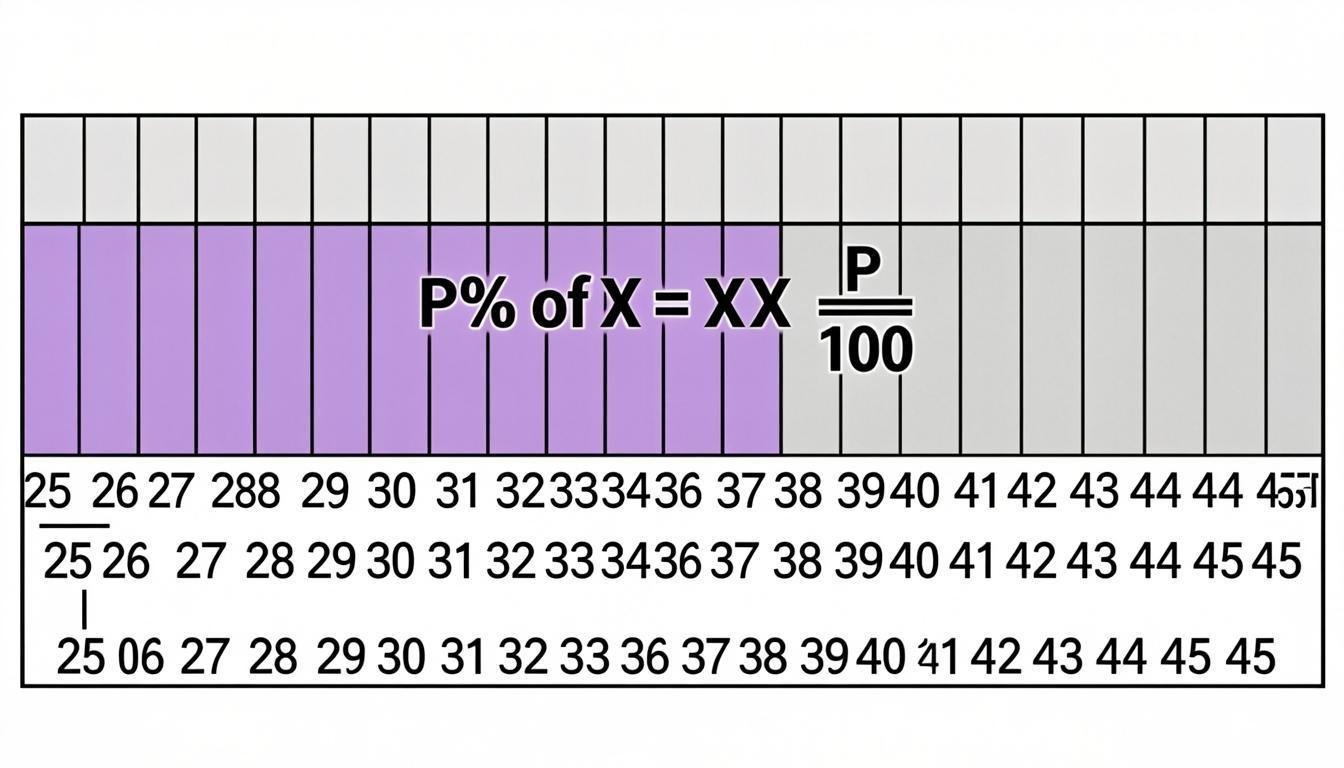
One percent is one hundredth part of something. In mathematics, one percent is one hundredth part of a number.
To find P percent of a number X, use the formula: Result = X · P / 100.
Example: Find 4% of 500. First find 1%: 500 / 100 = 5. Then: 5 × 4 = 20. Therefore, 4% of 500 is 20.
Another example: Find 8% of 25. Calculate in one step: 25 × 8 / 100 = 2.
Common Percentage Shortcuts
50% = ½, 25% = ¼, 10% = 1/10, 5% = 1/20, 1% = 1/100. So 15% of 60 = 10% of 60 + 5% of 60 = 6 + 3 = 9.
Everyday Examples
6% of 3,000 dollars: 3000 × 6 / 100 = 180 dollars.
12% of 250 km: 250 × 12 / 100 = 30 km.
When Percentage Exceeds 100%
When the percentage exceeds 100%, the result is larger than the original number. For example, 150% of 40 = 40 × 1.5 = 60. Always distinguish between "increased by P%" and "increased to P%."
Advertisement
More in 📊 Percentages
Advertisement